Zandro Salvo
Copywriter · AI content systems
Available for select projects Vancouver, BC Copywriter × Systems Builder

One marketer.
An entire content department.

I build AI content production systems, designed by a copywriter, so the output never reads like AI. Fifteen years of writing that converts, now wired into systems that produce it at volume: strategy, workflow, tooling, and the words themselves.

What you're looking at

This page is a working example of what I do: AI content systems, designed by a copywriter. The tools on it run live, in the page. The claims link to published work.

148+ guides in three months. 50+ posts on top. Five times output by week two. Three client systems by week three. 15 years of copy that sells. Every word of seattlehouse.com. Zero dependencies. Zero em dashes. Specify to build, four to one. Set, in register.

The short version · every number is verified further down this page

0+
Guides shipped, plus 50+ blogs, in first three months
0×
Output within two weeks of hiring
0
Client systems, one builder, by week three
0+
Years writing copy that sells

01 · The system · An AI production line, live in this page

The blog engine that runs three clients at once

Plain version: two months into an agency job, I built the machine that now writes for my three clients. This section is that machine, demonstrated.

I write copy, and I build the machine the copy comes from. Client-specific AI workspaces, research routing, cache documents, written SOPs, and self-built tools, run as one production line. The architecture is the job. The writing is its quality control.

Two months into an agency copywriting role, I did the job I was hired for, then built the machine that does it faster. Within two weeks, output ran at five times the expected pace. By week three, unprompted, the system covered all three of my primary clients.

It's not a prompt. It's a production line. Run a job through it.

Content Production Console · self-built · browser + Anthropic API · v12

Click it. A real job order moves through the seven stations below, and the console above drafts along.
  1. IntakeOne brief per client, decided once. The system never asks twice.
  2. RoutingResearch routed per client: sources, laws, comparables, tone.
  3. CacheCache documents hold what the client already said. Nothing gets re-explained.
  4. DraftThe console runs the draft against the Claude API. Client presets, structured output.
  5. EnforceThe rule set runs on every line. A miniature runs later in this page.
  6. The writerEvery piece passes through me. Volume is the system's job. Judgment is mine.
  7. ShipCMS-ready Markdown, out the door. 148+ guides and 50+ posts in three months.

Inside the line · The outline generator

One keyword in. A complete brief out.

The first machine on the line, and the one everything downstream depends on. Type a keyword or topic; Claude searches live rankings, reads the search intent, and returns a content brief the client can own in Google and in AI search: ChatGPT, Perplexity, AI Overviews. Every outline is client-specific and optimized three ways at once: SEO for rankings, GEO for AI citation, AIO for AI Overviews.

Outline generator · Working replica Idle
Awaiting a topic

A replica with canned runs. The real tool calls Claude, searches live rankings, and builds each brief from scratch. Either way, the brief feeds the drafting station next.

02 · Selected work

Client, in-house, and agency work

Six case studies. Everything below is one of three things. Checkable: named, live, linked, so open it. Confidential: framed honestly and not reproduced. Or runnable: working in this page right now. No metric appears here that you cannot verify. Selected confidential work available on request.

Case 01 · Luxury residential · 2026

Named · Live · Checkable

Seattle House

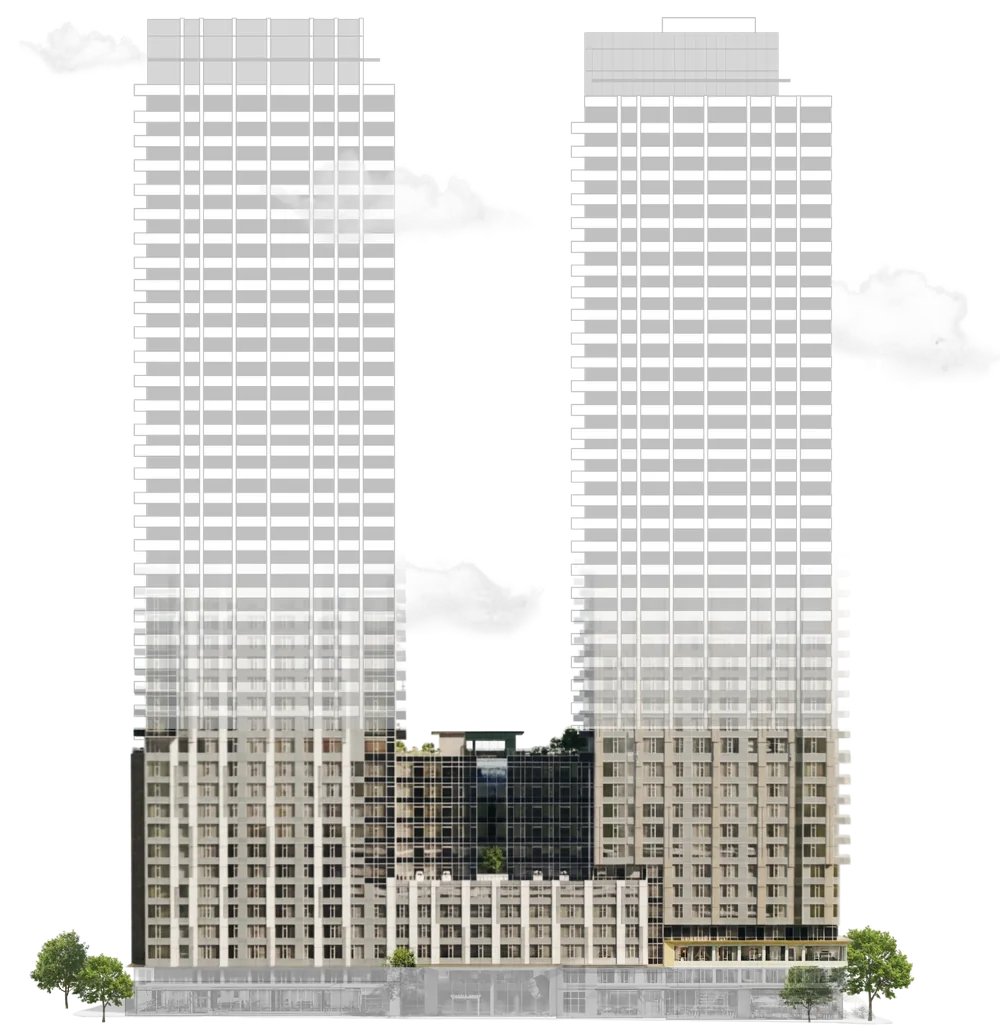
Every word on seattlehouse.com. The brand story, the naming system, three distinct sub-brand voices, and every line of the live site. Written by me, start to finish.

The task

A ground-up luxury residential tower in Seattle's Denny Triangle, at the city's tech core, needed a complete verbal identity: a master brand, three sub-brands with genuinely different voices, and a full site that could sell 50,000 square feet of amenities without sounding like every other luxury lease-up in the country.

What I did

Wrote the master brand voice and positioning. Named and voiced three sub-brands as three expressions of one idea, not three products. Wrote the entire live site: hero, sub-brand pages, neighbourhood, design, amenities, and the connective copy between them. Built the voice system that keeps three registers distinct, and ran the editorial sweep that enforced it across web and collateral.

How I improved it

The brief could have produced three luxury towers wearing three names. I made them three ways to live in one building, each with a register that never crosses into the others: one still, one kinetic, one connected. Then I resolved a rhythm problem where stacked fragments read as choppy rather than confident, so a short line only lands where it is earned.
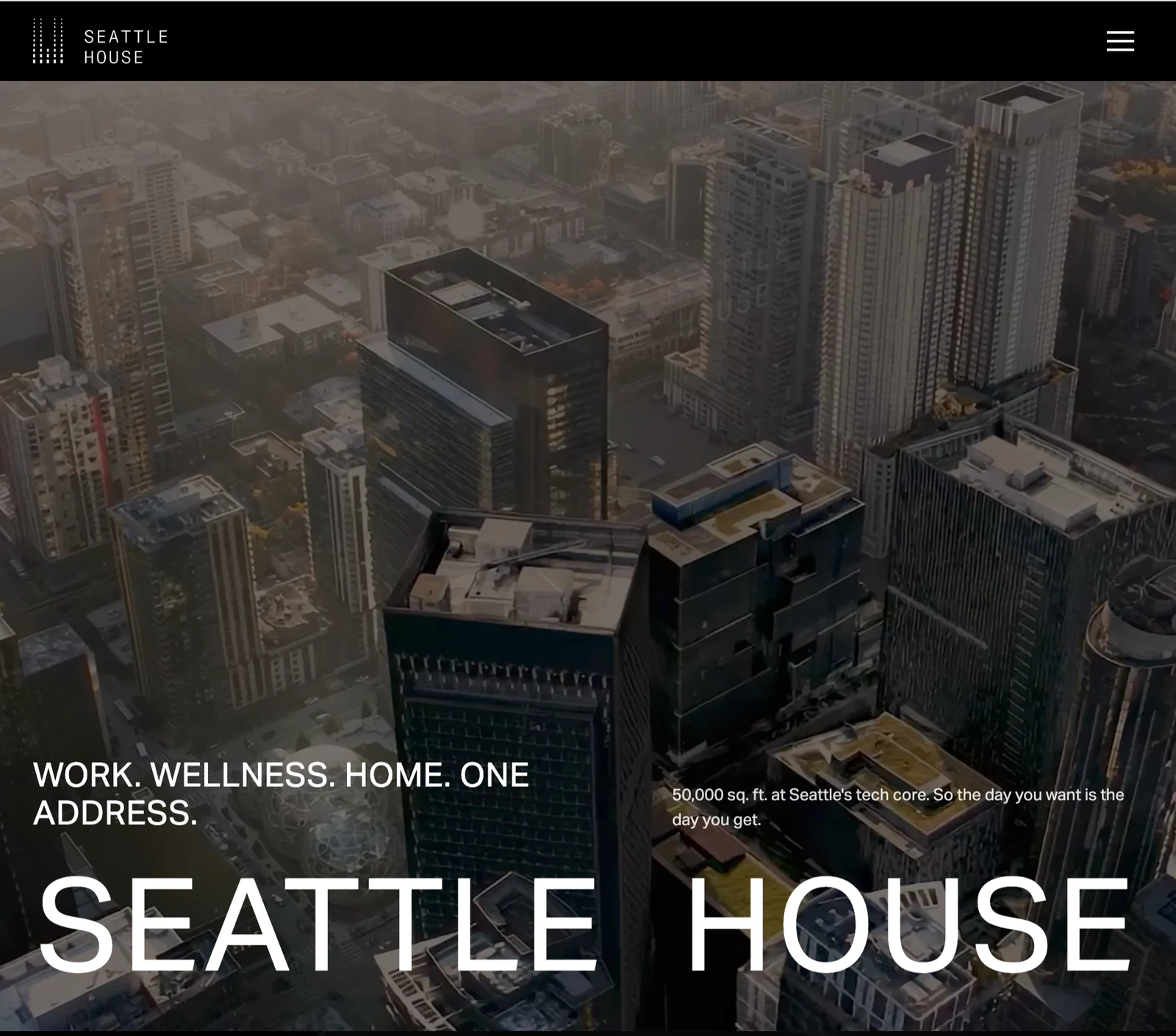
Hero section of the live seattlehouse.com site

seattlehouse.com · as live

  • AmenitiesA meeting closes out in the Board Room, the tension of it easing in the Steam Room, all of it gathered into 50,000 sq. ft. Without leaving the building.
  • DesignEvery residence balances openness with definition: functional without feeling sparse, comfortable without feeling cluttered.
  • N'bourhoodAt the heart of Denny Triangle, where the city's best restaurants, shops, and late nights out are all close enough to matter, without a car, a plan, or a second thought.

From the live site, verbatim

Interactive · The three voices, in motion

One building. Three ways to live well. Puget, Cascade, and The Olympic. One for the quiet. One for the momentum. One for the everyday.

PugetReg 01 · Stillness
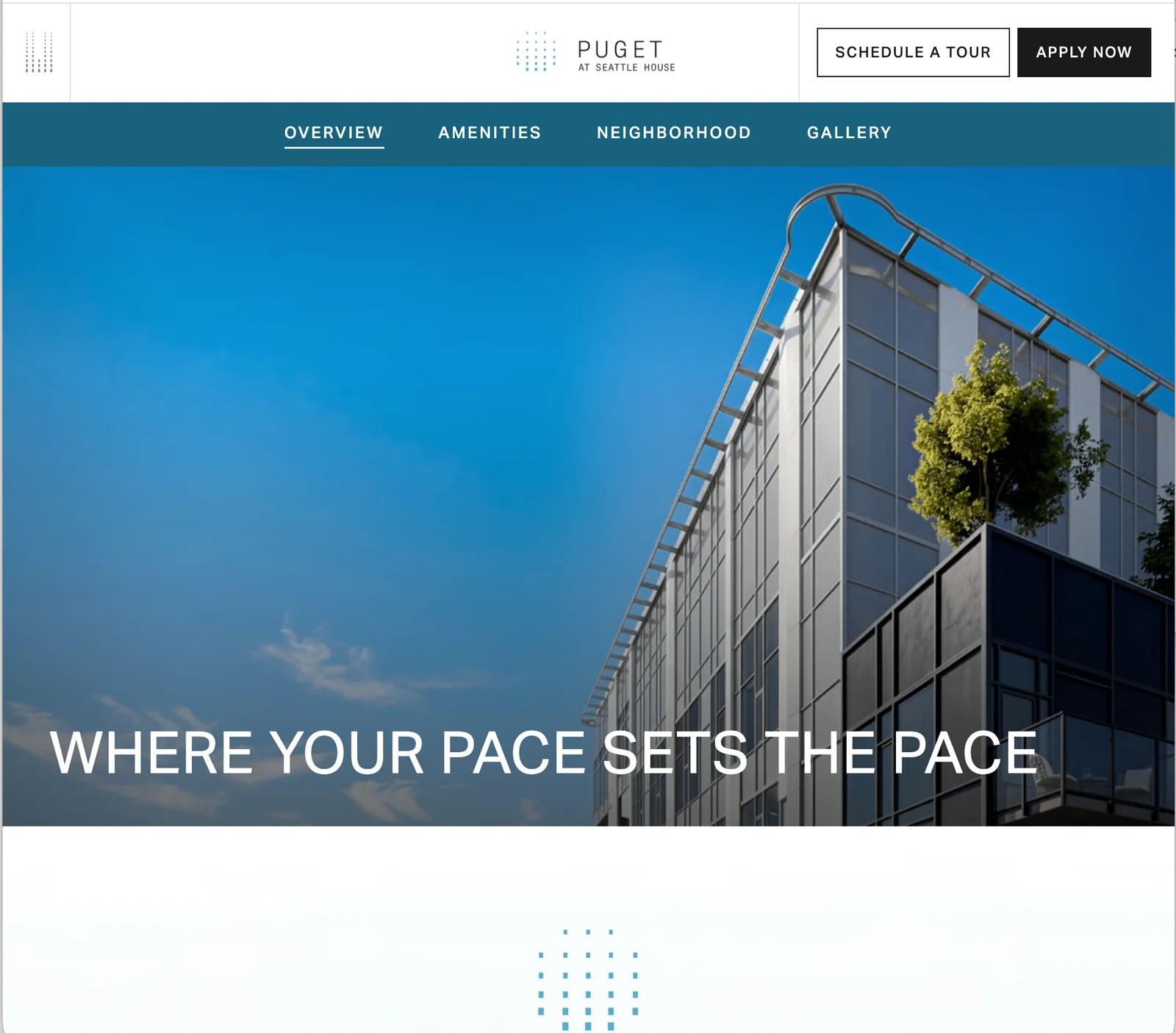
where stillness lives

For those who move at their own pace. Light comes in wide, and the tide doesn't rush. Neither do you.

CascadeReg 02 · Momentum
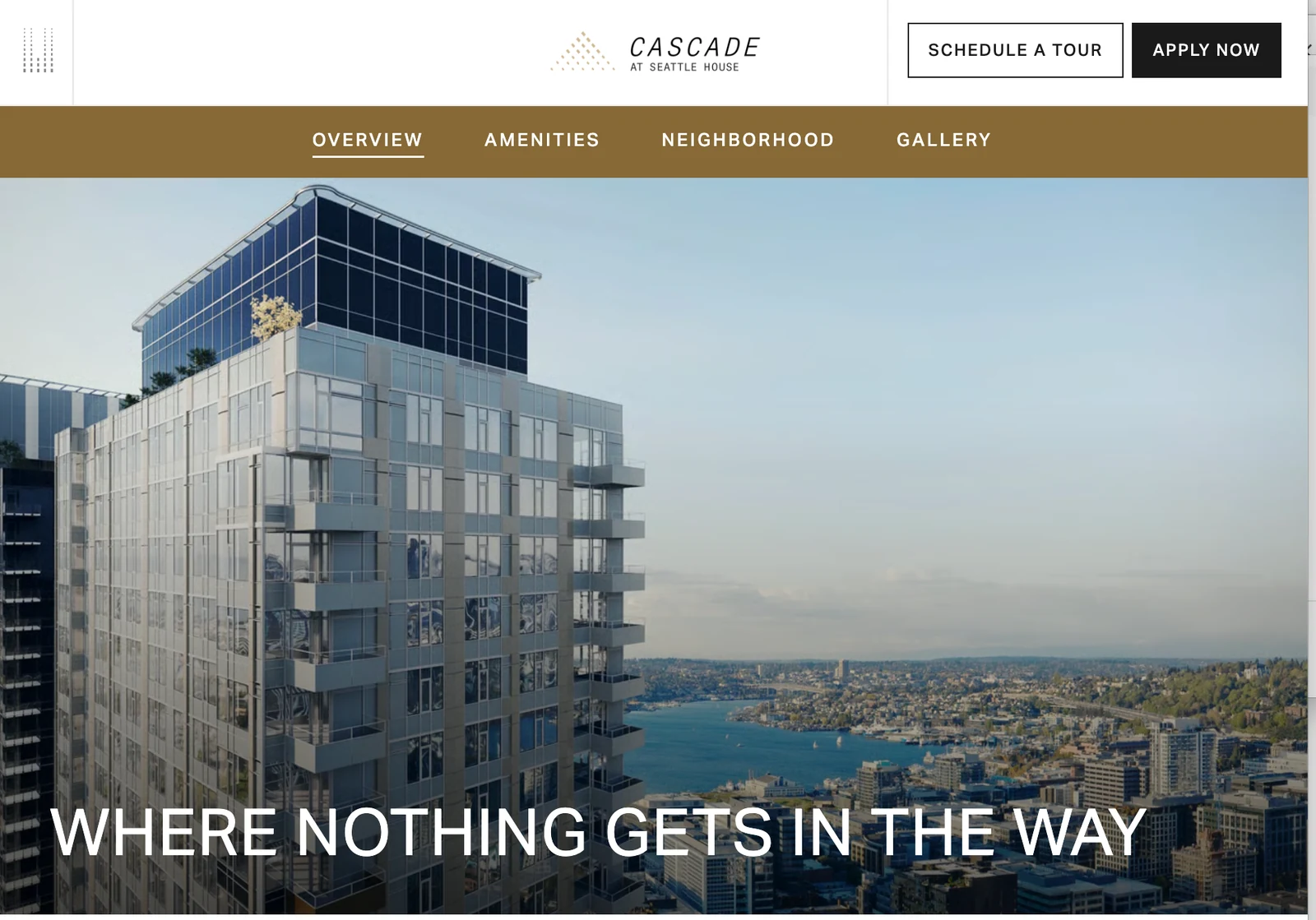
where momentum lives

For those who maintain momentum, not build it. Light's barely up. You already are. Momentum starts before the day does.

The OlympicReg 03 · Reach
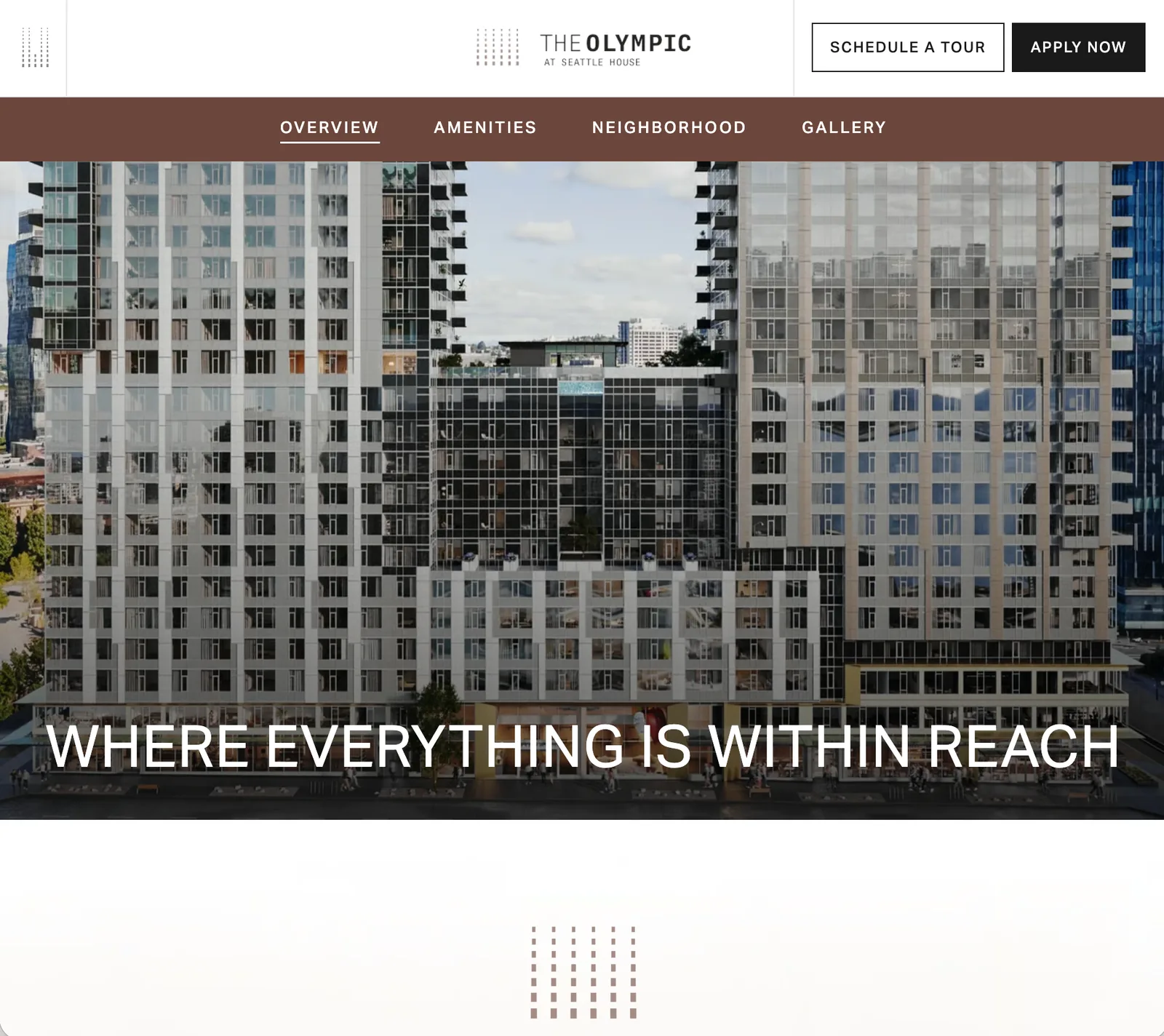
where everything's within reach

For those who want everything close. Down for coffee, up for a game of pool. You didn't plan the evening. The building did. Always within reach.

The building itself. Click a name below, or just keep scrolling: each register names itself.

Same crop. Same scale. Three registers, one building.

Different rhythms. Same standard.

The outcome

The full brand system shipped and is live. Creative director sign-off across all three sub-brand pages, slide by slide, with nothing left outstanding. The proof is not a metric. The proof is the URL.

Next · Writing history into a sale →
Case 02 · Film · Luxury residential · 2026

Confidential · Framed

Writing history into a sale

The client

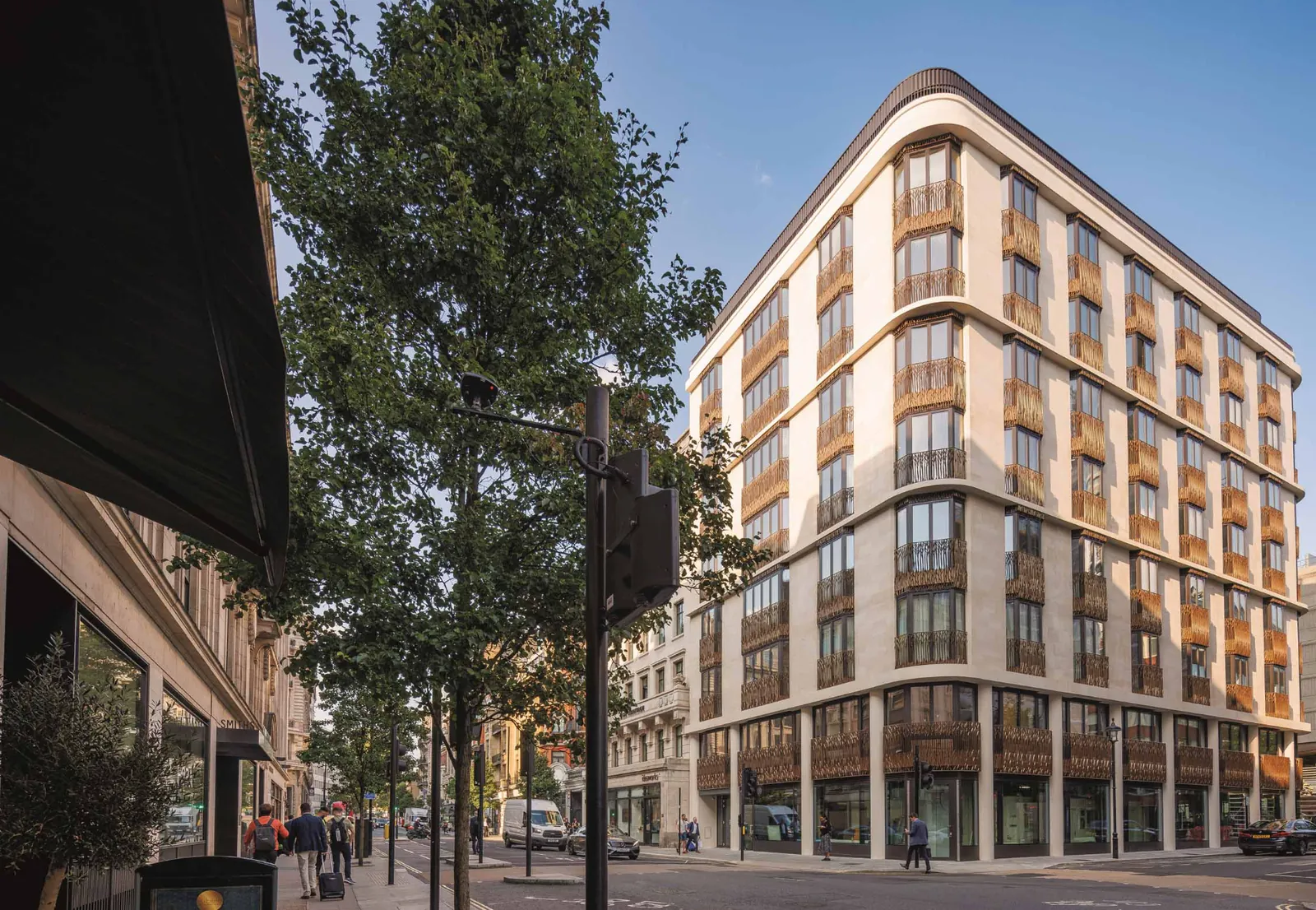
A globally recognized luxury property developer whose portfolio spans some of the tallest residential towers in Asia and North America, and a landmark heritage address in central London.

The task

Introduce that heritage address on film, first in a series, to an audience of high net worth investors and prospective residents. The brief asked for a voiceover script.

What I did

Wrote the script, and reframed the sell. Buyers thinking in generations respond to recognition, not instruction. So the film does not tell the viewer the address matters. It shows them it always has.

There is land. Commodity. And then there is place. Meaning. Nine centuries on, the streets here still carry the names of the families who shaped them.

The outcome

Approved by the creative director without structural revision, delivered within a single working day of the brief, as a production-ready package mapping directly onto the CG and visual template.

Next · A supertall, in print →

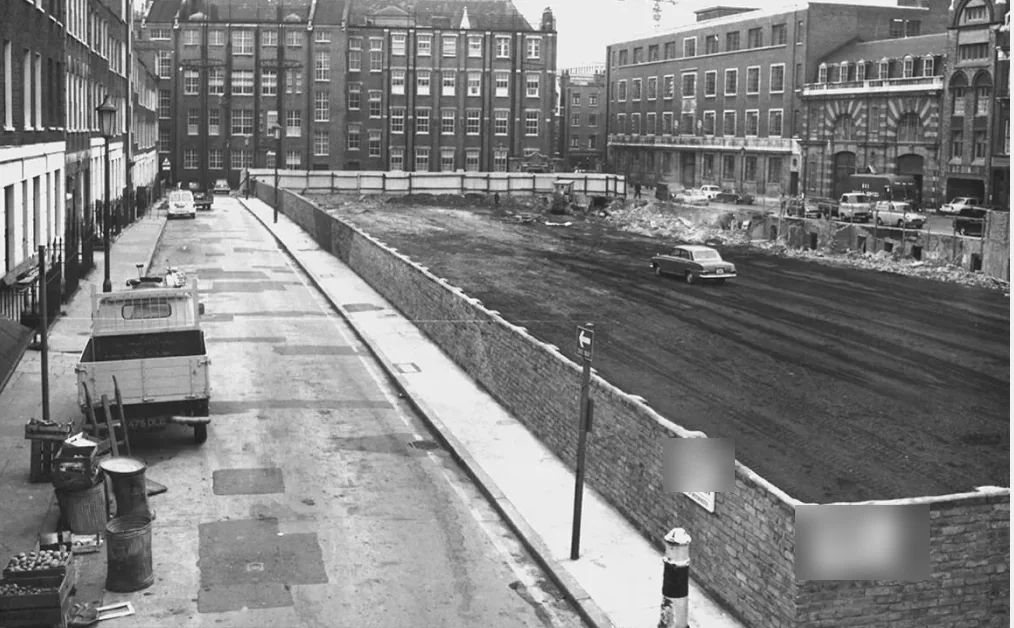
What you're seeing: the address itself. The site as the camera found it decades ago, dissolving into what stands there now. The film sells the years between.

It appears on the 1708 plan. On the 1809 survey. On every record drawn since. Unnamed. Unclaimed. Drafted across generations.

Case 03 · Luxury residential · Print · 2026

Confidential · Framed

A supertall, in print

The client

A supertall luxury residential tower in downtown Toronto, among the tallest in Canada, designed by one of the world's most recognized architecture firms.

Supertall is a measurement, not a brag: a tower 300 metres or taller.

The task

A print magazine spread for that tower, aimed at a design-literate luxury audience. Editorial register, held to a demanding brand voice, iterated directly with a creative director.

What I did

Wrote the spread copy. Worked through successive rounds with the creative director, moving the language away from promotional hype toward factual, editorially-driven prestige, until the register matched the ambition of the building.

How I improved it

Two moves carried the piece. On the opening, I traded generic excitement for editorial prestige built on fact: the height, the architect's global standing, the building's standing in the country. On the close, I built a layered narrative that moves from national pride to personal ownership, written for dinner-table quotability.

The outcome

Creative director sign-off through iterative rounds. No metric applies to a print spread, and none is claimed.

Opening · Before

Get ready to experience the most amazing views from the city's best building. You're going to love every minute in this incredible tower.

Opening · After

[Tower Name] marks a new chapter for the city's skyline. At its full height, it becomes the region's tallest residential tower, designed by an architecture firm celebrated for supertalls across three continents. This is the firm's landmark building in the country.

Closing · Before

This is a nice building in a great location.

Closing · After

[Tower Name] joins the skyline as the landmark the country claims as its own. The region's tallest residential tower. The address people recognize. Designed by architects celebrated across the world's most significant skylines. This is what residents call home.

The tower name is redacted as [Tower Name] throughout. That is the arrangement.

Next · Moe's, two seasons →

Case 04 · Furniture · Retail · 2025

Named · Documented

Moe's, two seasons

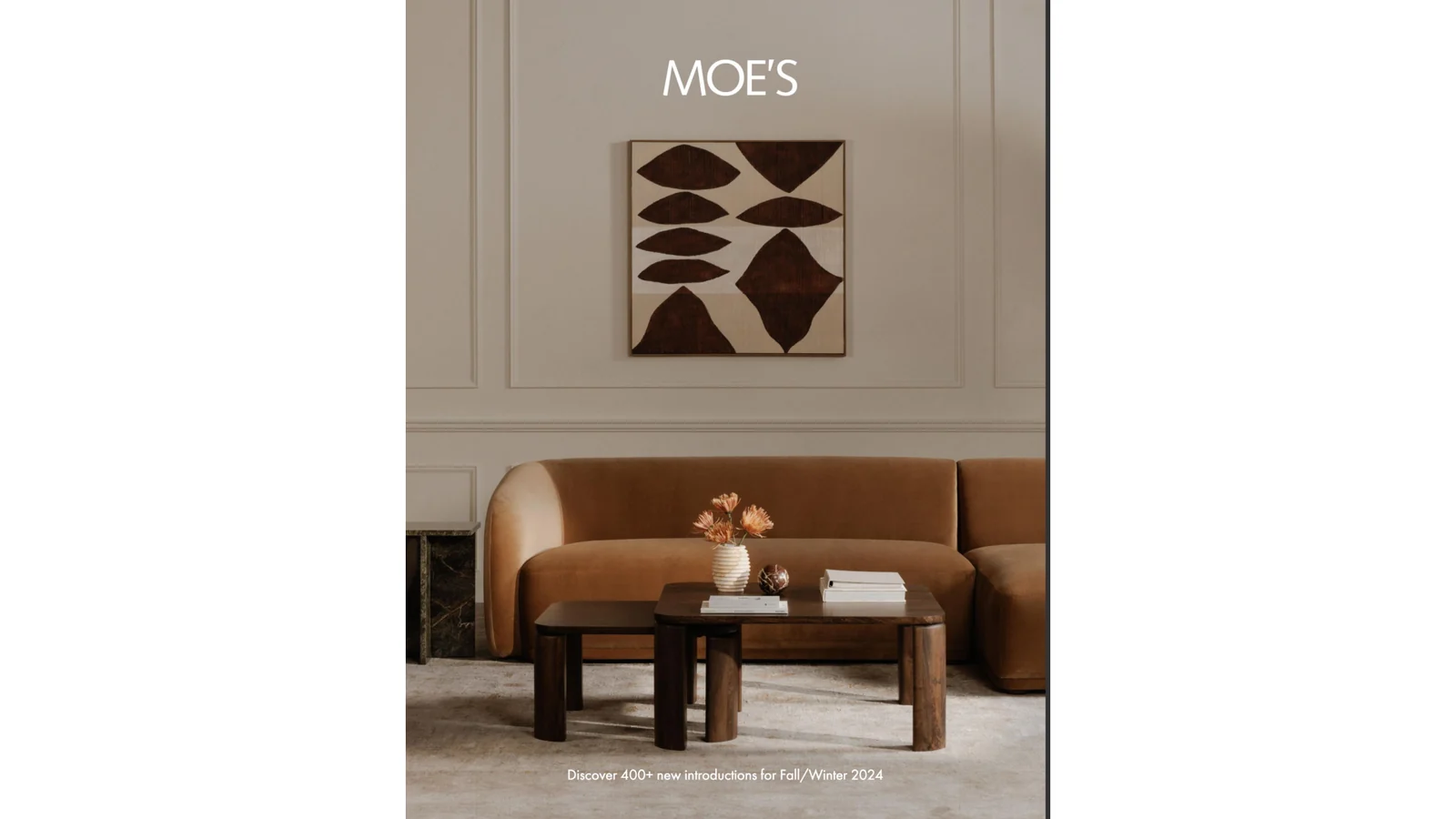
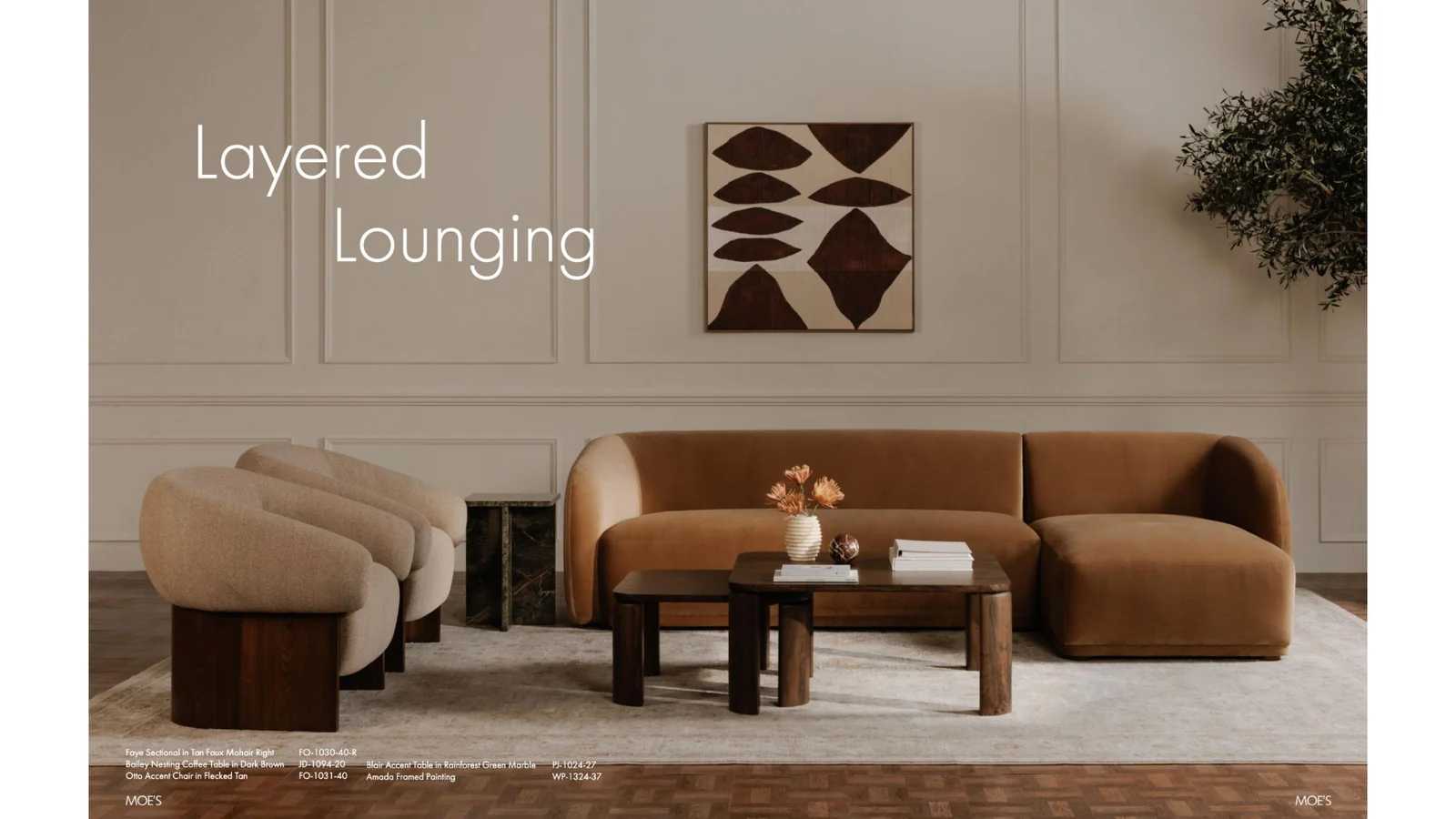
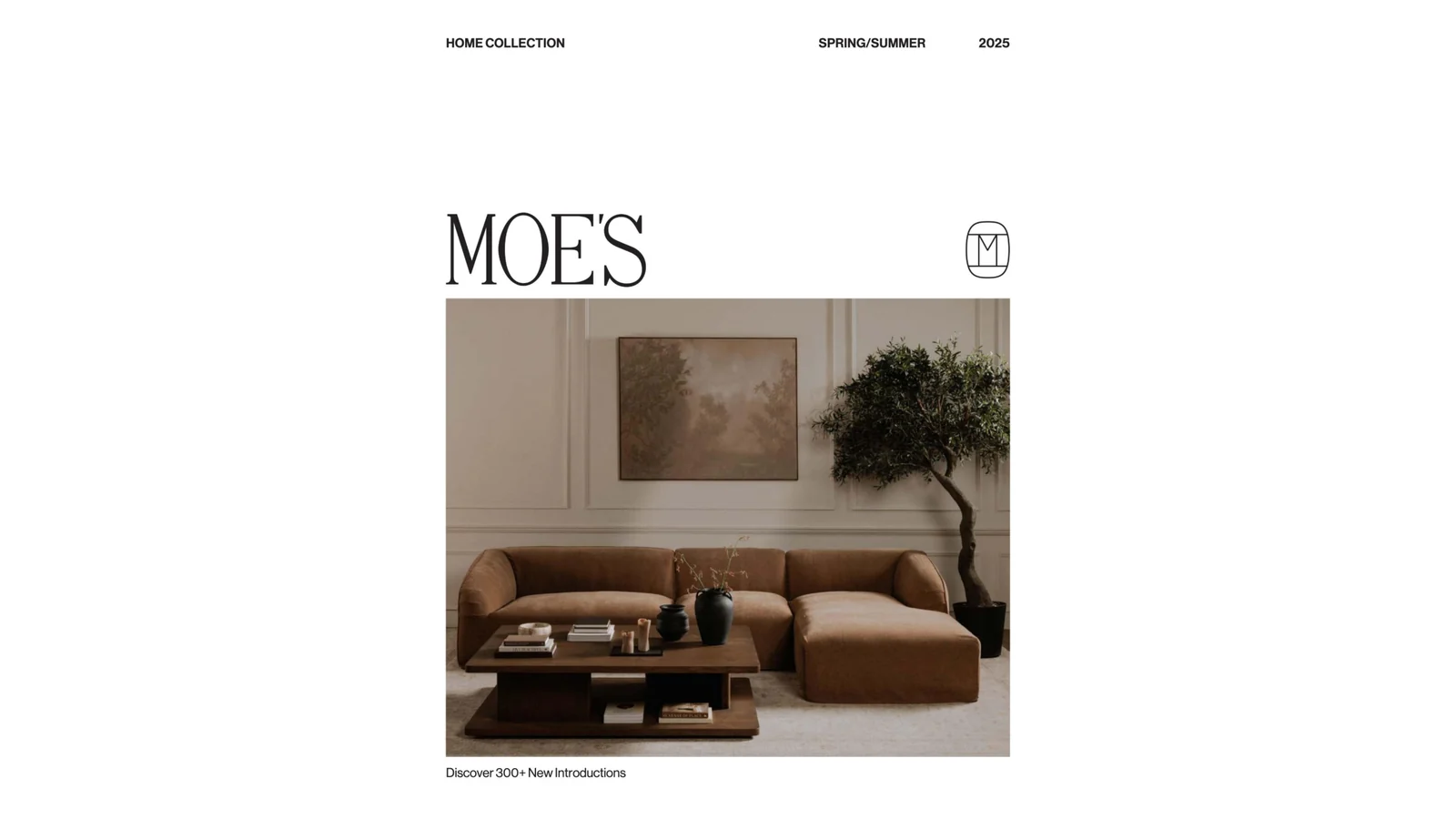
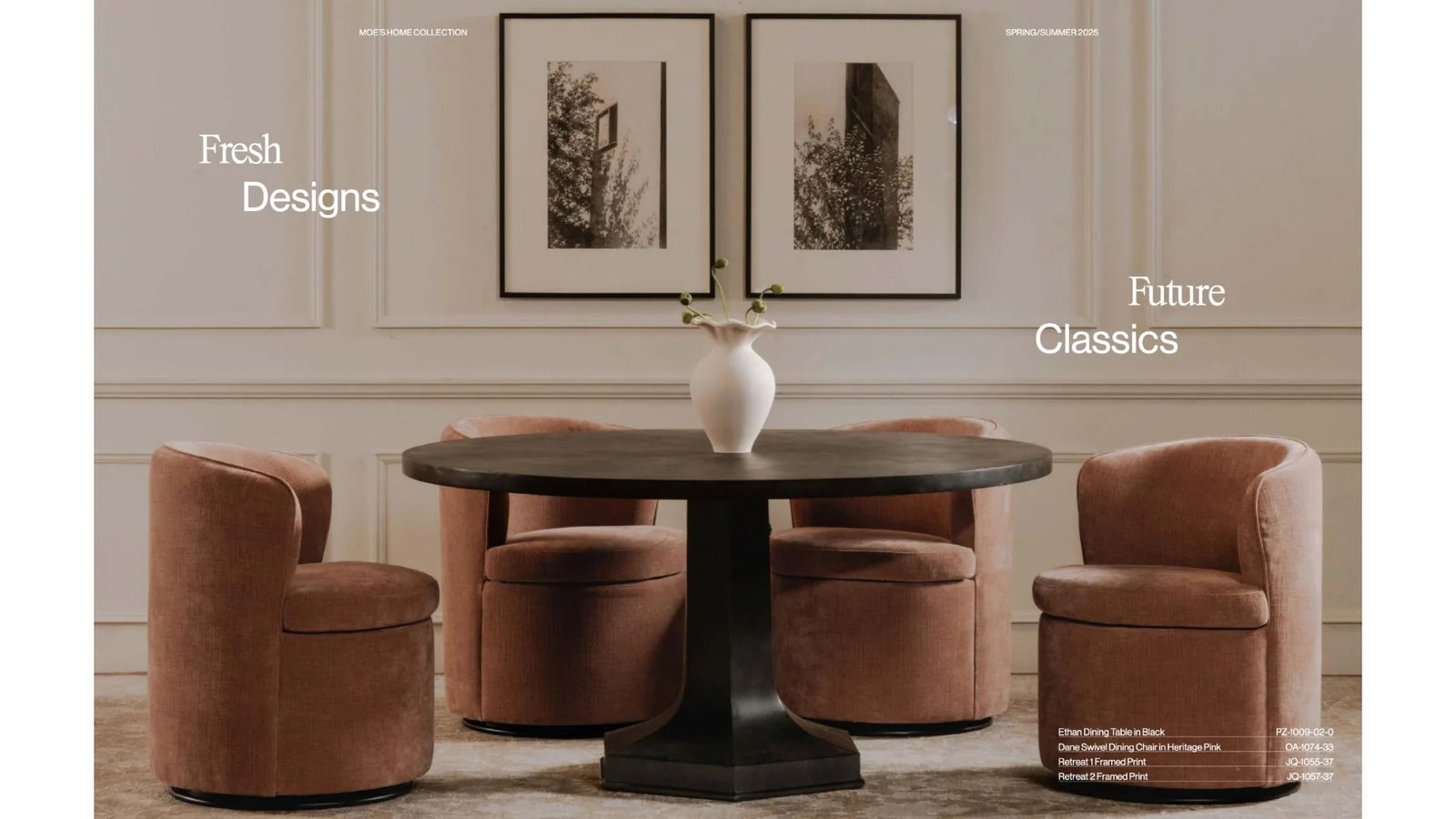
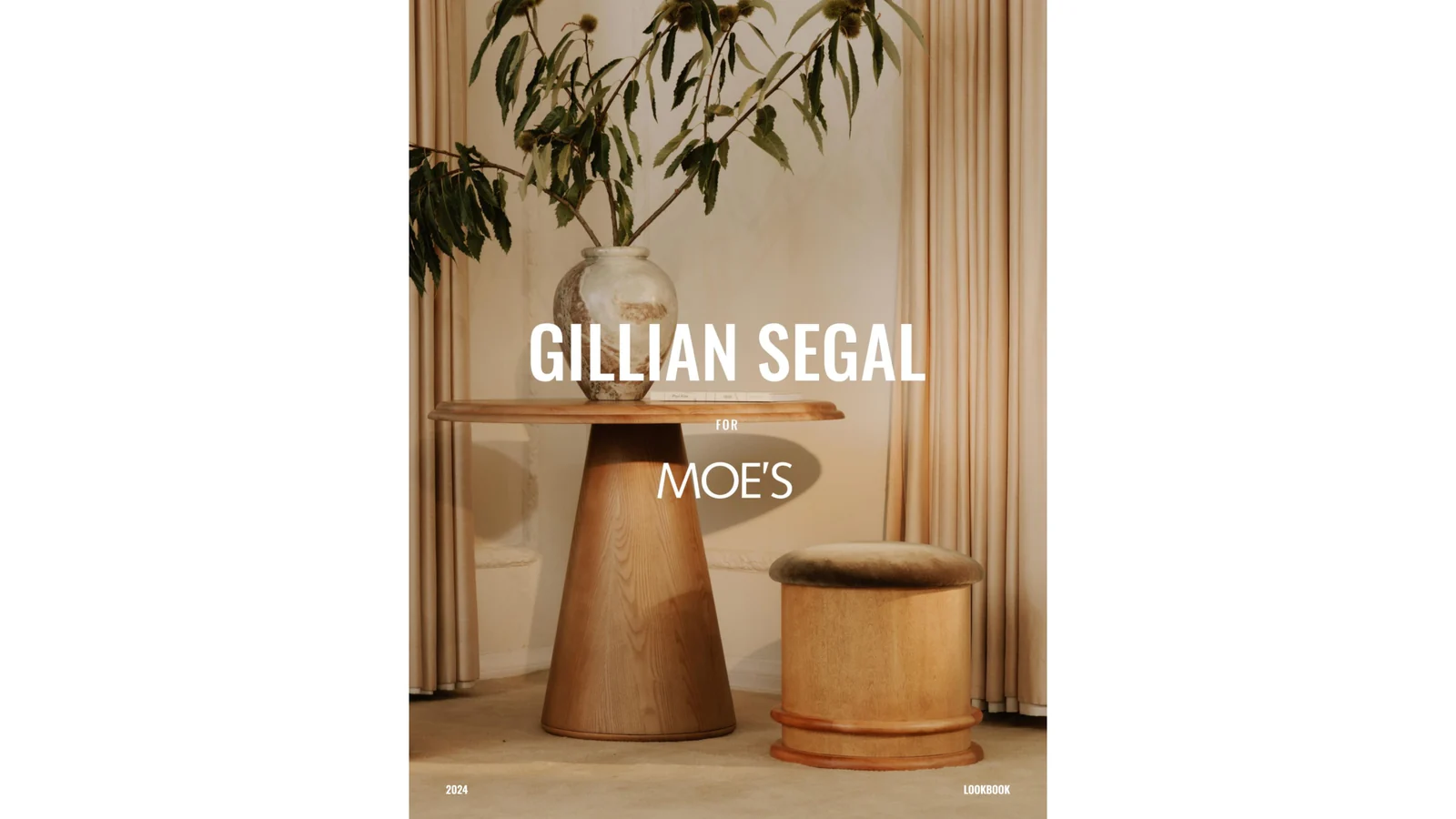
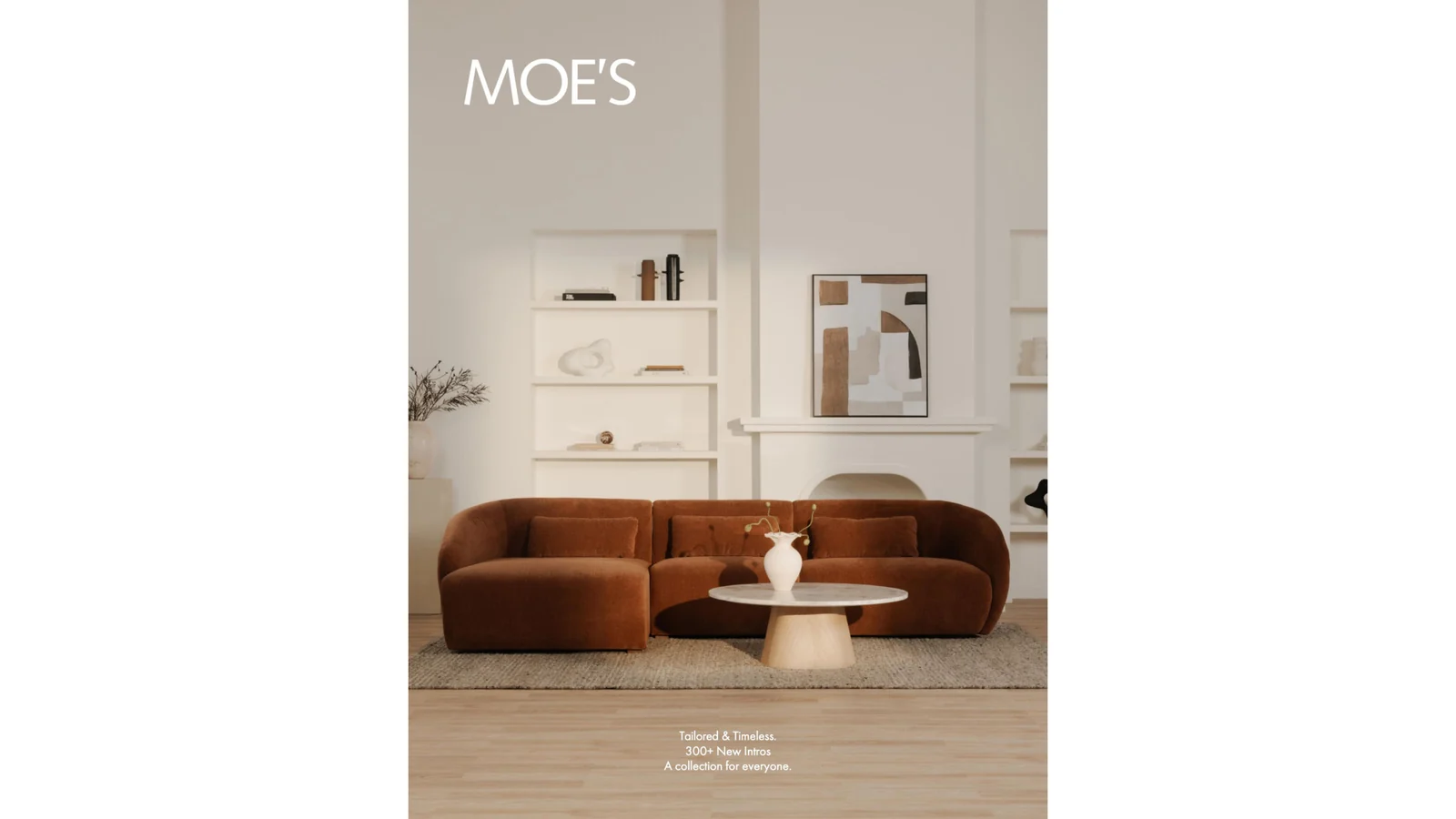
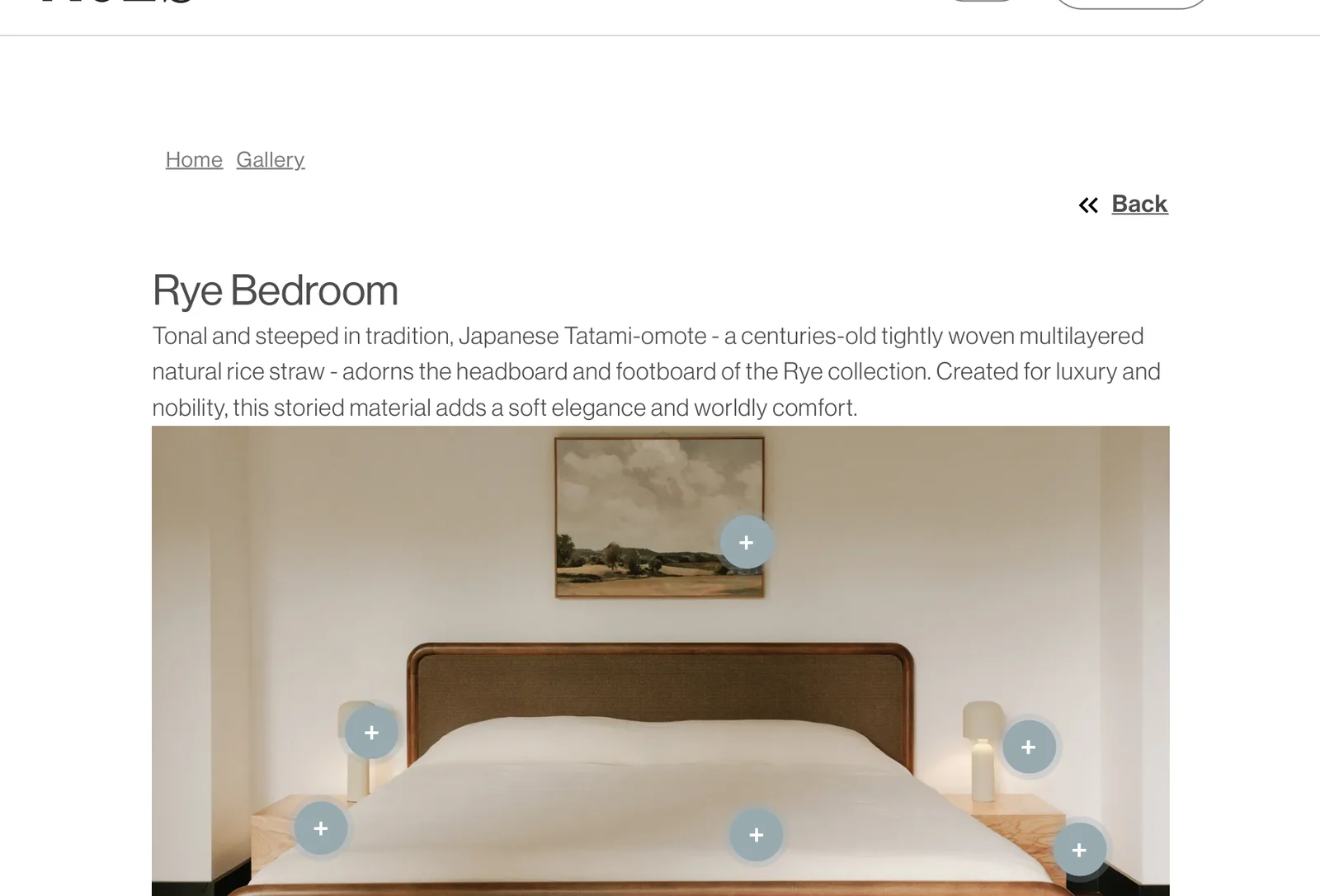
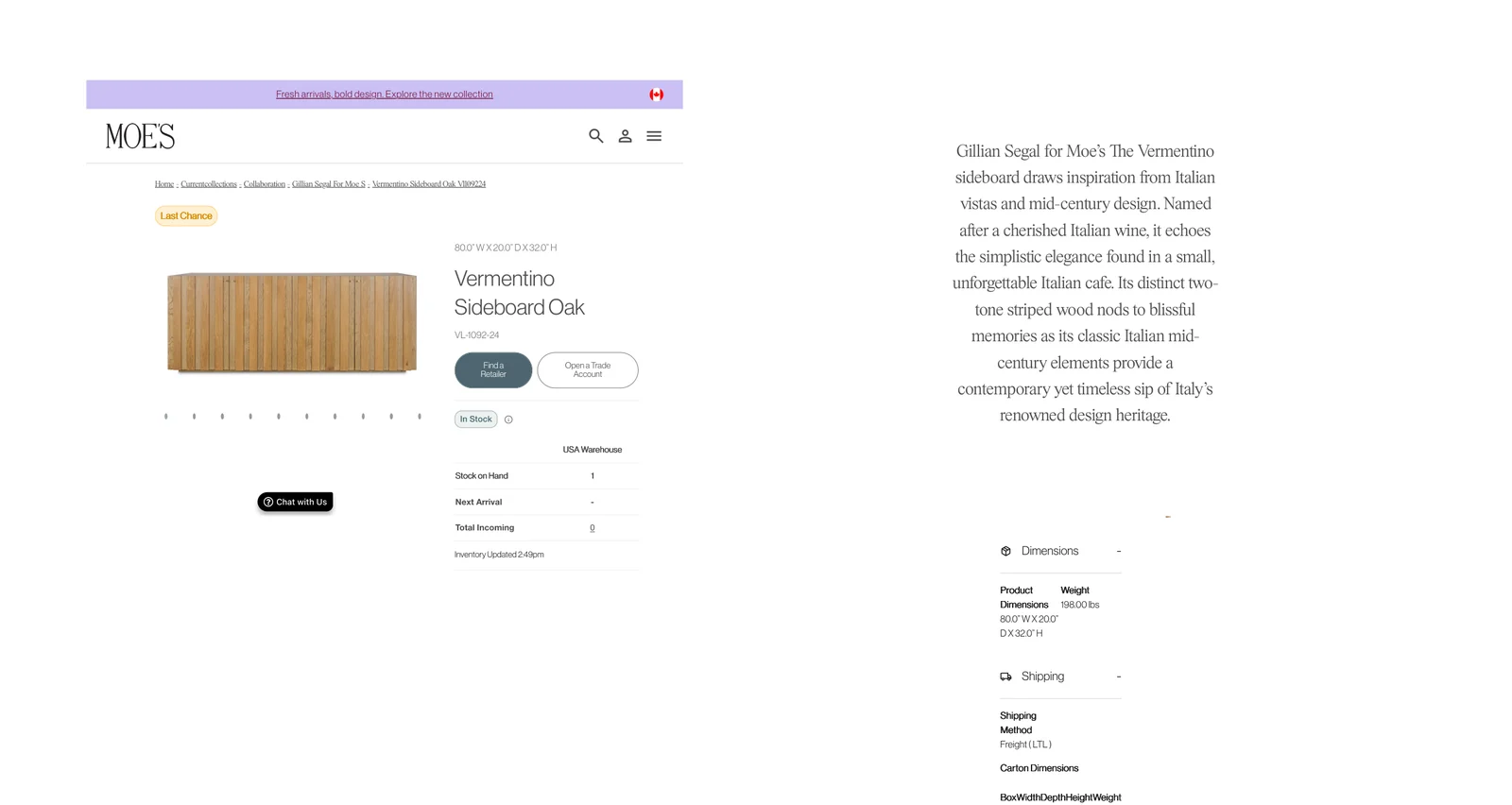
Moe's is a North American furniture wholesaler whose retail clients include Restoration Hardware, Anthropologie, and Crate & Barrel. The assignment: two seasonal lookbooks, FW24 and SS25. Hundreds of introductions per season, one brand voice across both, and the second book not allowed to repeat the first.

FW24 works in deep tones and rich textures. SS25 turns the page on a rebrand. The aspirational register and the product story pull against each other on every spread; the job is keeping both. Both books shipped to the retail network, as published below.

Next · Twister Conveyors →

Case 05 · B2B industrial · 2021

Named · Documented

Twister Conveyors

Twister builds industrial equipment for some of the world's largest hemp and cannabis cultivators. The assignment was product page copy for their conveyor line, written for a buyer who reads spec sheets for a living.

The engineering stayed engineering: a 304 stainless bed, casters, and walls; a washdown-rated VFD; sidewalls that overlap the belt so product stops disappearing under it. The job was the order, not the softening. Every spec on the page argues yield, quality control, or fewer people required. It shipped, and it is below as published.

Even the lubricant within the bearings is FDA compliant in case of incidental contact with flower.

From the page. The spec sheet is the persuasion.

Next · Save Millions of Dollars →

Case 06 · B2B industrial · Case study · 2022

Named · Documented

Save Millions of Dollars

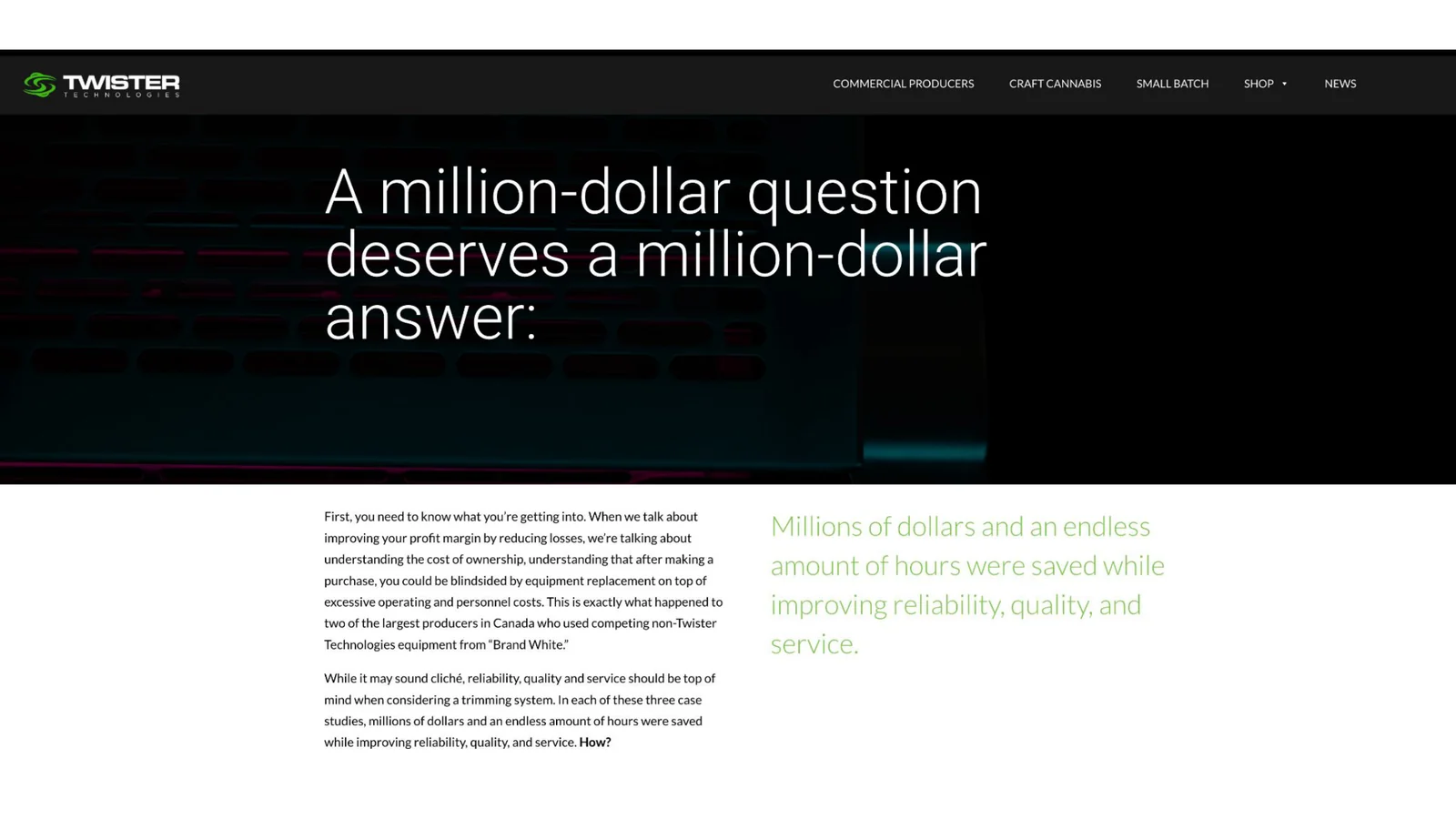
A published customer case study for Twister, written to answer the only question a procurement team actually asks: what does this equipment cost to run? Three customer stories carry the argument. A BC greenhouse cultivator cut its all-in hourly cost from $761.34 to $285.75. A top-ten licensed producer saved $220,415.48 a year. The same producer scaled up again and saved $1,330,184.73.

The craft problem: spreadsheets don't persuade, and hype doesn't survive procurement. So the piece keeps the total-cost-of-ownership math intact and gives it a story: a villain the piece only ever calls "Brand White," witnesses quoted by title, and a closing question the reader has to answer for themselves.

A million-dollar question deserves a million-dollar answer.

The published headline. Every number above is from the page, as published.

Next · The best lines →

03 · The best lines · One at a time

The strongest single lines from the projects above. They rotate on their own. The arrows and frames below skip around.

01 / 08

04 · The rule set · A live demo

The rules, running

A working tool, not a screenshot. My eight writing rules run as code in this page: type in the left box, and the right box marks what breaks them and why. They are my rules, not universal ones. That is the point: a voice is a set of decisions, enforced. No API, no network.

The proof · Hover an underline for the reason

    06 · Operator · The person behind it

    Copywriter first. That's the point.

    • 15+ years in copywriting: retail, real estate, B2B industrial, hospitality, travel, broadcast
    • Currently: agency copywriter, Vancouver, running AI content ops across three clients
    • Luxury real estate campaigns for developments in Asia, Canada, and London
    • Canadian Press style, brand voice systems, punctuation-level style enforcement
    • AI stack: Claude, Perplexity, self-built HTML tooling, documented SOPs
    • Freelance: marketing lead for a B2B video production company

    Most AI content fails for a boring reason: the person running the system can't tell good writing from plausible writing. I can. Fifteen years of instinct-driven copy, the kind you develop selling furniture, conveyor belts, hotel rooms, and towers that haven't been built yet, is the quality filter every AI workflow is missing.

    The systems side came from necessity. I have ADHD, which means I don't get to rely on willpower and clean desks. I design for momentum instead: low-friction workflows, decisions made once and encoded into SOPs, tools that remove the blank page entirely. It turns out that's exactly how you design AI production systems other people can actually run.

    So that's the offer. Not a copywriter who dabbles in AI. Not an AI person who can't write. Both, on purpose, at the same time.

    07 · Contact

    Let's build your content department

    If you're hiring, or you have more content ambition than content capacity, I'd like to hear about it. I answer fast.

    Optional: hangman, played on a typewriter. Beat the copywriter at his own game; he picked the words, so the house always writes.

    The machine is a typewriter. Wrong guesses feed your page into the roller. Six, and it types the word without you.

    08 · Colophon

    How this was made

    Four hours specifying. One hour building. That ratio is the pitch: the thinking is the work, production is the cheap part, and a content operations system exists to keep it that way.

    It's a single HTML file plus an assets folder. No frameworks, no CDNs, no trackers, no build step. Open it from a desktop or a phone and it looks like this.

    TYPE: Bodoni Moda italic, subset and self-hosted at 17 KB; system sans; monospace for the spec labels · PALETTE: stage black / ivory / signal orange, the colour of press registration marks and things you're meant to notice · IMAGERY: rendered from the published PDFs and live tool interfaces · DEPENDENCIES: zero · EM DASHES: also zero